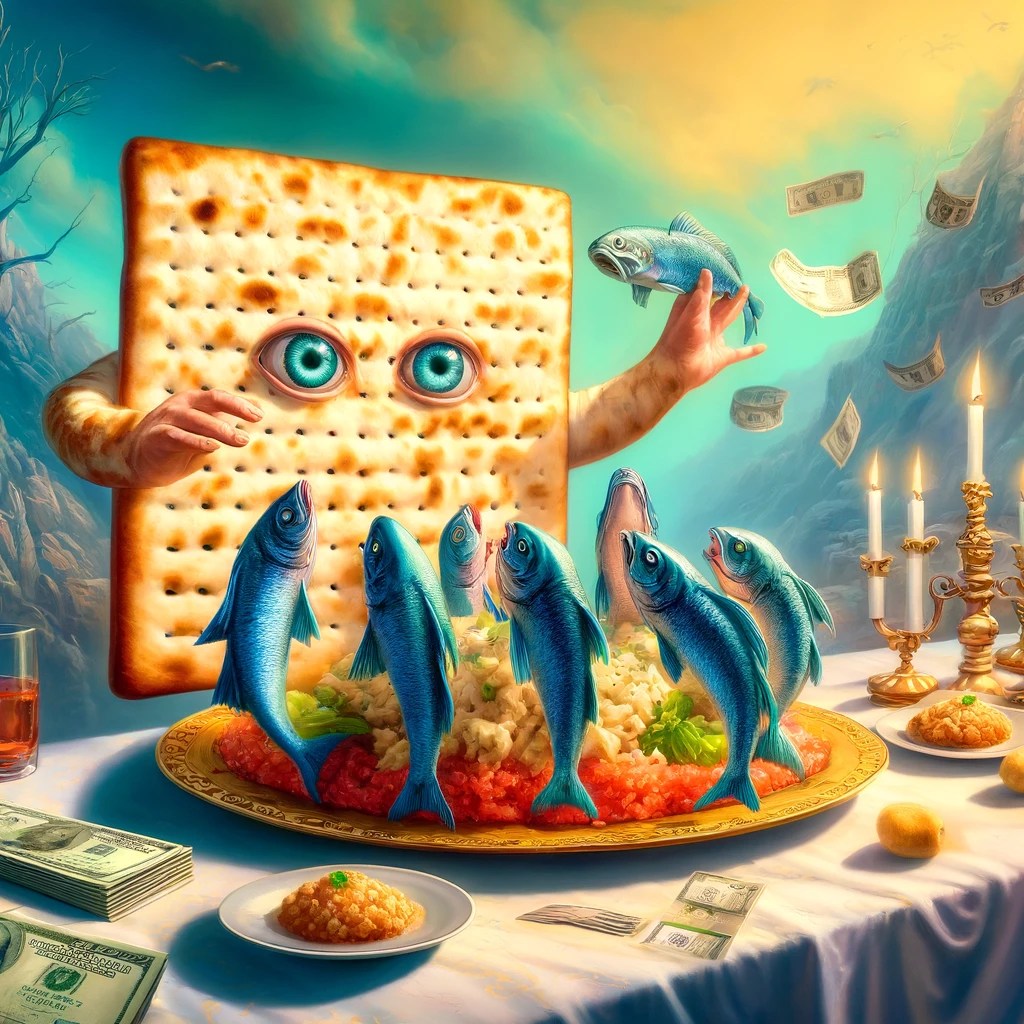
As a Jewish solopreneur during Passover, I both celebrate the Israelites’ liberation from slavery in Egypt, but also think about the parallels between the religious stories and an entrepreneur’s journey.
A key part of the Seder is the Four Questions, which are posed by the youngest child at the table.
Question 1
- Passover: Why is this night different from all other nights?
- Entrepreneur: What makes my venture unique?
- To disrupt the status quo, a product or service needs to offer something different; something special.
Question 2
- Passover: On all other nights we eat leavened bread, but on this night we eat only matzah.
- Entrepreneur: What are you willing to give up to pursue your dream?
- The Israelites left the familiar comforts of Egypt with minimal provisions, symbolized by the matzah. Entrepreneurs have limited time and usually forego a steady paycheck while working long hours.
Question 3
- Passover: On all other nights we eat all kinds of vegetables, but on this night we eat only bitter herbs.
- Entrepreneur: Are you prepared to face challenges?
- The bitter herbs represent the hardships endured by the Israelites during slavery. The entrepreneurial path is rife with challenges, yet it’s voluntary. Regardless, resilience is critical in the face of inevitable difficulties.
Question 4
- Passover: On all other nights we do not dip our food even once, but on this night we dip twice.
- Entrepreneur: Are you open to learning and adapting?
- The double dipping during the Seder symbolizes the complexity of the Exodus story. Jews leaving Egypt faced detours, challenges, and unexpected turns. Building a successful business requires constant learning and adaptation. Be receptive to feedback, adjust your approach based on market trends, and don’t be afraid to experiment.
Overall, Passover and entrepreneurship are fueled by a desire for freedom. The Israelites leave the security of Egypt, while entrepreneurs break away from traditional employment to pursue their own ventures. Both journeys involve venturing into the unknown to forge a path of self-determination.
Just like Moses faced plagues and parted the Red Sea, solopreneurs navigate a challenging landscape (and part with steady paychecks). Limited resources, market competition, and regulations test resolve and ingenuity. Each Passover serves as a reminder of the importance of resilience and perseverance.
The Israelites’ leap of faith out of Egypt mirrors the risk inherent in starting a business. Both require embracing uncertainty with a vision for a brighter future. Passover, with its focus on renewal, reminds entrepreneurs to adapt and pivot as needed to achieve their goals.
Bridging these themes, the Seder plate itself holds symbols rich with meaning, directly paralleling entrepreneurial principles.
Matzah, the unleavened bread, signifies the Israelites’ haste during their escape. In the startup world, it translates to the “lean startup” approach – starting with a minimum viable product (MVP), conserving resources, and focusing on rapid iteration.
Bitter herbs represent the bitterness of slavery. For solopreneurs, it’s a reminder of the sacrifices and challenges inherent in building a business.
Passover is a powerful narrative of liberation, perseverance, and community. As I and others continue on the entrepreneurial journey, one can draw inspiration from this carb-lite holiday.


 unpublished alpha