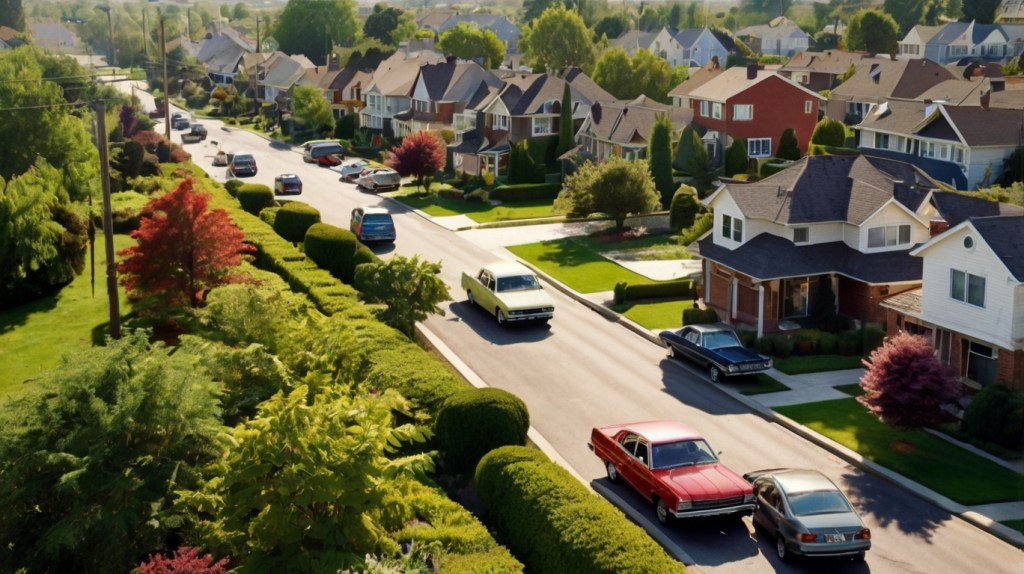
We tend to think of suburbs as a product of free market forces – the American Dream made manifest. Families voting with their feet, fleeing urban blight for the manicured lawns and cul-de-sacs of suburbia. But that’s an oversimplification. The truth is suburbanization was heavily underwritten by government policy and subsidies.
Take the mortgage interest deduction. The mortgage interest deduction, enacted in 1913 and expanded post-World War II, turbo-charged demand for suburban single-family homes by allowing households to deduct mortgage interest from taxable income. Homeownership rate in the U.S. increased from 44% in 1940 to 62% by 1960, partly due to these policies. While not explicitly pro-suburban, it conferred an outsize benefit on suburban homeowners with larger mortgages.
Then there’s transportation infrastructure. Eisenhower’s interstate highway system, mostly federally-funded, facilitated long-distance commuting between suburban residential enclaves and urban job centers. A colossal subsidy for suburban living.
The FHA and VA mortgage insurance programs also played a pivotal role from 1934-1962, insuring over $119 billion in home loans, disproportionately financing suburban tract housing on the metropolitan fringe. Levittown, NY, one of the first mass-produced suburbs, was heavily financed by FHA and VA loans
But the subsidies go deeper than that. Many suburbs employ exclusionary zoning tactics like minimum lot sizes, prohibition of multifamily dwellings, and growth boundaries – legally entrenching suburban residential densities. This restricts housing supply, inflating property values for existing homeowners. A de facto subsidy paid by those priced out. The federal government spends approximately $50 billion annually on highways, with a large portion supporting suburban commuting.
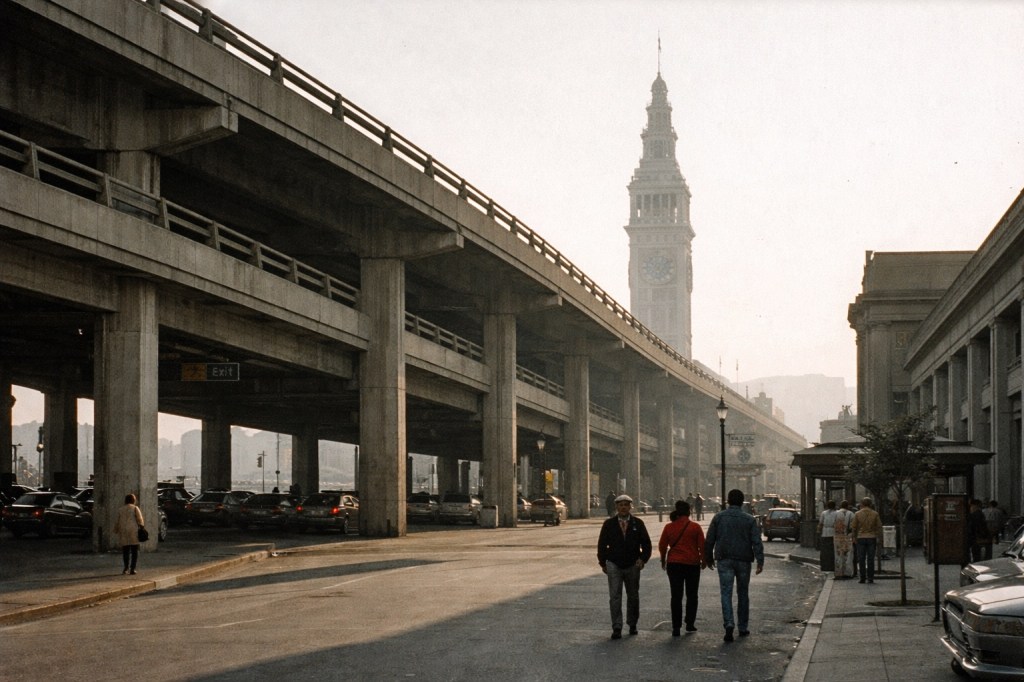
The 10 freeway, one of the most famous highways in LA, split the wealthiest Black neighborhood in Los Angeles and cut it in half during its construction in the 1960s. This example is one of many such stories, so one could use the words ‘destruction’ or ‘systemic racism’ to discuss highway infrastructure and suberbia growth in lieu of the word ‘subsidy.’
As suburbs expand, many are developing in areas with high natural disaster risks. Taxpayer dollars are heavily spent on repairing homes, subsidizing flood insurance, and providing emergency services and infrastructure repairs.
For instance, Dauphin Island, Alabama, faces severe coastal erosion, yet homeowners continue to receive federal disaster aid and flood insurance payouts, allowing repeated rebuilding in these vulnerable locations. This has drawn criticism (yes, John Oliver is one of those critics) for perpetuating risk and burdening taxpayers.
The National Flood Insurance Program (NFIP) has been scrutinized for offering subsidized premiums, much lower than market rates, which encourages development in high-risk zones. Calls for reform suggest aligning premiums with actual risks to reduce taxpayer burden. 90% of natural disasters in the United States involve flooding, causing more economic damage and loss of life and property than any other natural hazard, and their frequency and severity are increasing due to climate change. The NFIP is $20.5 billion in debt, with insurance companies profiting while the government covers the claims, incentivizing continued risky development that the free market wouldn’t tolerate.
Natural disasters are generally unpredictable and affect homes indiscriminately. However, subsidies that encourage risky building behavior should end, so the costs are borne by those who choose to take the risk, not society as a whole. Reflecting this shift, three insurers covering 40% of California homes either paused issuing new policies or imposed strict caps in 2022.
So while we romanticize suburbs as an organic lifestyle choice, their emergence was more akin to an orchestrated land grab – greased by a tangle of regulatory incentives, infrastructure investments, racism, and back-door subsidization policies. Not exactly the free market at work.


 unpublished alpha