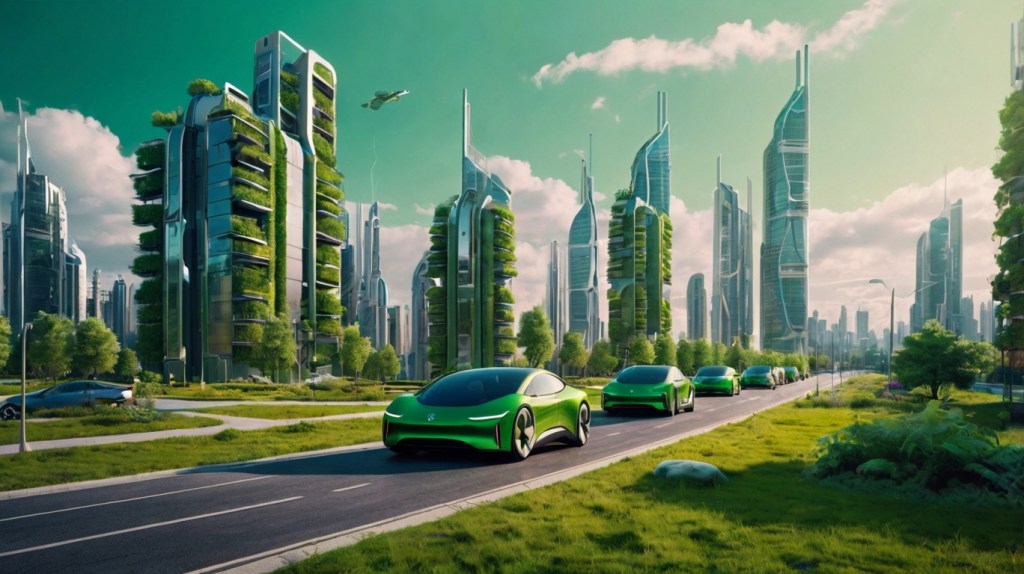
The electric vehicle (EV) revolution is accelerating, but it faces a significant roadblock: building a robust, accessible charging infrastructure.
the ev landscape
Imagine living in Brooklyn, New York, (with dreams of) owning an EV. That dream ends quickly as you realize the logistical nightmare. No garage. No driveway. But most surprisingly, almost no public chargers. Tia Gordon faced this exact dilemma in 2020, prompting her to co-found It’s Electric. This scenario is not unique; it’s a reality for millions of urban dwellers across the U.S.
Despite the hurdles, the momentum for EV adoption is undeniable. In the USA, transportation accounts for about 30% of greenhouse gas emissions. Currently, there are about 2.5 million EVs on American roads of the total 282 million cars, a number projected to more than 10x to between 30 and 48 million by 2030. This rapid growth underscores the urgent need for scalable, efficient charging infrastructure.
In some countries, EVs make up a much more meaningful percentage of vehicles. In Norway, EVs make up over half of all new car sales, while they are projected to reach 13% this year in the USA (including plug-in hybrids). Tesla is a huge driver of this growth, as it’s sold roughly half the 2.5 million EVs that have entered U.S. roads since 2011. Primarily achieved through a combination of tax breaks, subsidies, and stringent emissions regulations.
l2 vs. l3 charging infrastructure
Understanding the nuances between Level 2 (L2) and Level 3 (L3) charging infrastructure is crucial for grasping the future of EV adoption. Level 1 (L1) aren’t a focus here as those are the basic EV chargers that use a standard home’s 120-volt outlet, adding 3-5 miles of range per hour, which means it takes days to fully charge up.
L2 chargers, typically delivering 240 volts at 40 amps, provide around 25 miles of range per hour of charge. This makes them ideal for overnight charging in residential areas or for prolonged parking periods in urban environments. However, there are 40 million drivers in the U.S. who park on the street and do not have access to dedicated off-street parking, making it challenging for them to charge electric vehicles.
Quick aside on volts, amps, and watts. Voltage (volts, V) is the electric potential difference, like the pressure pushing electrons through a circuit. Amperage (amps, A) measures the flow rate of electrons, similar to how much water flows through a pipe. Wattage (watts, W) indicates the energy transfer rate and is calculated by multiplying volts and amps (W = V × A). That’s the first and last equation in this article. In EVs, higher voltage means more potential power, higher current allows faster charging, and wattage shows the overall power output and efficiency. These concepts explain how EVs store, transfer, and use electrical energy.
As of early 2024, the U.S. had significantly more L2 chargers than L3 (DC fast) chargers. The ratio was typically around 5:1 or 6:1 in favor of L2 chargers.
| Feature | Level 2 (L2) Chargers | Level 3 (L3) Chargers (DC Fast) |
|---|---|---|
| Power Output | 3.3 to 19.2 kW | 50 to 350 kW |
| Voltage | 240V (residential), 208V (commercial) | 400 to 900V DC |
| Current | 15 to 80 amps | Up to 500 amps |
| Charging Time | 10-60 miles of range per hour | 60-100 miles of range in 20 minutes |
In contrast, L3 chargers, or Direct Current Fast Chargers (DCFCs), operate at much higher power levels, often exceeding 400 volts, and can recharge an EV battery to 80% in approximately 30-60 minutes. While L3 chargers are indispensable for long-distance travel, their deployment is more complex and costly, making L2 chargers a more feasible solution for daily urban use.
Building new superchargers is extraordinarily power-intensive. Each L3 charger can demand as much power as a 300-unit apartment building, necessitating significant upgrades to local electrical infrastructure. This includes installing high-capacity transformers, reinforcing transmission lines, and sometimes even constructing new substations. These upgrades require coordination with local utilities, extensive permitting processes, and substantial financial investment. Additionally, urban environments pose unique challenges due to space constraints and the need for aesthetic considerations. These factors combine to make the rollout of superchargers a slower and more challenging process compared to L2 chargers.
Still, the process of installing a curbside charger involves extensive and costly infrastructure work, including street closures, digging six to seven feet below grade, installing transformers and sub-meters, and setting up the actual charger. This complexity contributes to the slow rollout of EV chargers.
innovative solutions: curbside charging and beyond
Gordon’s brainchild, It’s Electric, addresses the pressing need for urban charging solutions. Unlike conventional chargers that resemble bulky gas pumps, their design is sleek and unobtrusive. The chargers are equipped with a detachable cable, setting a new standard for aesthetic and practical design. This approach not only preserves the urban landscape but also enhances user experience.
One of the less obvious but significant issues plaguing US’ EV charging infrastructure is the frequent breakdown of charging cables. These cables are often exposed to harsh weather conditions, physical wear, and vandalism, leading to frequent malfunctions. In Europe, this problem is mitigated by the use of detachable cables, which drivers bring with them and connect only when needed. It’s Electric’s adoption of this European model in the American market aims to address these issues, enhancing both the durability and user-friendliness of public chargers.
A 2022 study in California found that 27.5% of public DC fast chargers were non-functional. Maintenance issues range from simple software glitches to complex hardware failures. The average repair time for a DC fast charger is 3-5 days, with costs ranging from $250 for minor repairs to over $2,500 for major issues. However, innovative designs like modular chargers are emerging, allowing for quicker repairs and reducing downtime. Some companies are reporting up to 99.5% uptime for their latest charging station models, indicating a positive trend in reliability.
So, this design-centric approach is monumental, especially for densely populated areas like New York City, where space and aesthetics are paramount.
strategic implementation
The deployment of EV infrastructure is complex, involving regulatory, logistical, and financial challenges. Take New York City as a case study. The city currently has around 100 public curbside chargers, but Mayor Eric Adams announced a bold plan to transition all Rideshare vehicles to electric by 2030. This ambitious target will place additional stress on the existing infrastructure, necessitating innovative solutions and strategic partnerships. New York City has set an ambitious goal to install 10,000 curbside chargers by 2030.
This will help solve one of the main issues hindering EV adoption. According to a JD Power report released in May, among shoppers who say they are “somewhat unlikely” or “very unlikely” to consider an EV, 52% cite a lack of charging station availability as a reason for rejection—the highest proportion in the study. This figure has increased 3% points YoY. Reason number two is the high cost of electric vehicles.
While EV costs are expected to decrease with 40 new models launching by 2024, infrastructure remains imperative. From 2022 to 2023, the average new EV transaction price dropped by $15,000 but remained above $50,000.
Gordon’s It’s Electric is poised to play a key role. Their chargers are installed at no cost to cities or property owners. This model is made viable through a combination of federal funding, utility subsidies, and strategic partnerships. For instance, ConEd’s Make-Ready program offsets up to 90% of subgrade installation costs, significantly reducing the financial burden.
the role of design and ux
Design and user experience are often overlooked in discussions about infrastructure. Yet, they are vital for widespread adoption. Gordon’s experience in public tech installations in NYC has shaped her understanding of these elements. “We stripped away everything that could break,” she explained, referring to the minimalist design of their chargers. This not only reduces maintenance costs but also improves reliability, addressing a common pain point for EV users.
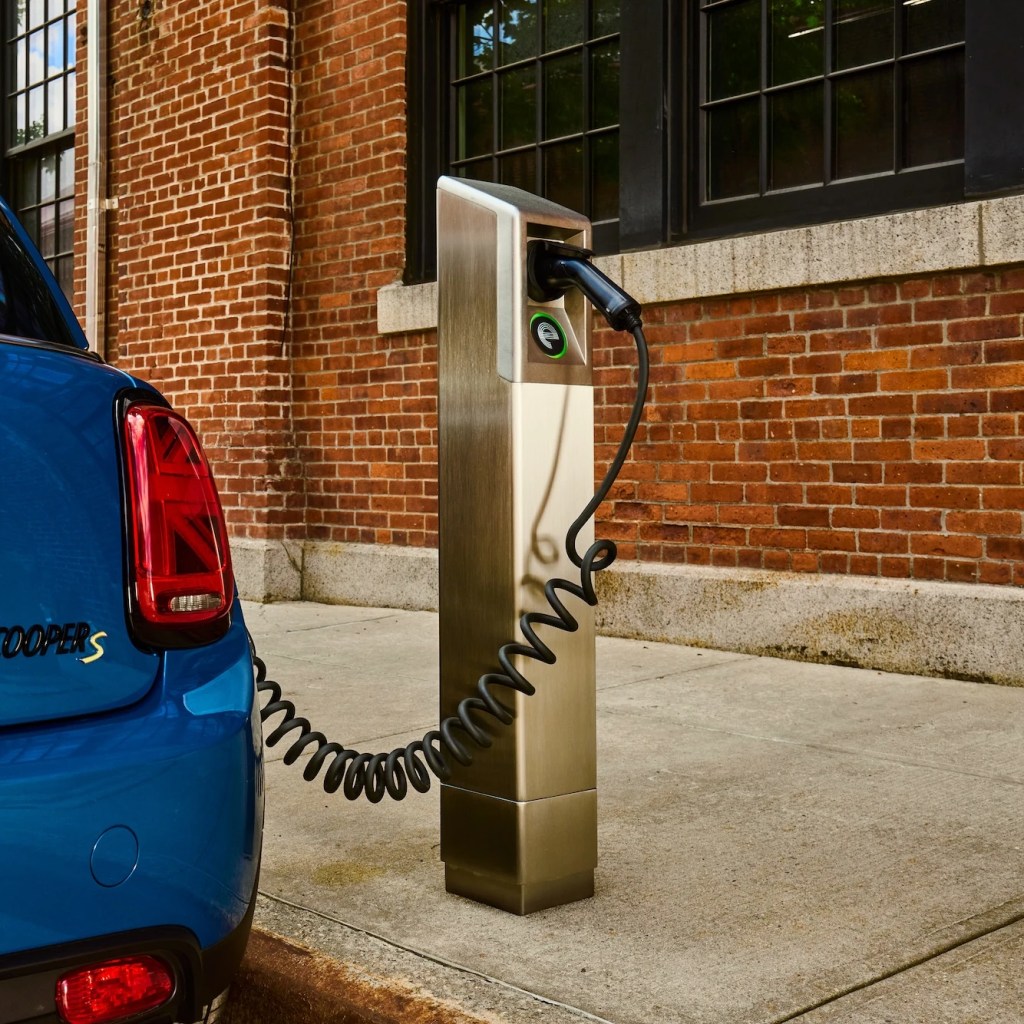
By tapping into the existing electrical capacity of buildings, It’s Electric transforms every building into a potential EV charger. This approach redefines urban energy infrastructure, turning a challenge into an opportunity. The revenue sharing model, makes it a compelling proposition to building owners. It’s Electric pays for the charge tariff directly to the utility, ensuring that the building’s utility bill remains unaffected, while providing direct monthly passive income to the building owners based on the number of charges that take place.
consumer engagement
The journey to an electrified future is not just about technology; it’s also about people. Consumer education and engagement are paramount. Misconceptions about EVs persist, and addressing them is required. For instance, the fear of range anxiety—worrying about running out of charge—something I know well from owning an EV for three years, is a downstream affect of access anxiety, where the concern is finding a charger. Proactive infrastructure development is essential to mitigate the looming climate crisis.
Tesla certainly understands this, however, in April they laid off the charging team, a move that highlights the complexities and financial pressures associated with scaling such infrastructure. Despite Tesla’s pioneering role in the EV market, the layoffs indicate the challenges even leading companies face in this sector. Economic pressures, supply chain disruptions, and the high costs of technology development contribute to these difficulties. This situation underscores the need for diversified approaches and robust support systems to achieve widespread EV adoption.
future directions
Looking ahead, the role of big data and predictive analytics will be pivotal in optimizing infrastructure placement and usage. Public-private partnerships (P3s) will also be instrumental. These collaborations can accelerate deployment, reduce costs, and ensure that infrastructure development keeps pace with EV adoption.
Gordon’s approach exemplifies this philosophy. By collaborating with cities and leveraging federal and state programs, It’s Electric is expanding rapidly. They have already begun pilots in Detroit and plan to triple their presence by the end of 2025.
underpinings of an electrified future
The transition to electric vehicles is not just a technological shift; it’s a cultural and philosophical one. It represents a move towards sustainability, resilience, and equity. The concept of deploying without discrimination is central to It’s Electric’s mission. By making chargers affordable and accessible, they ensure that all communities, including marginalized ones, benefit from the green economy.
This approach is essential for addressing disparities highlighted in a recent Axios article, which found that public EV chargers are mostly installed in affluent, white neighborhoods. Gordon’s model disrupts this trend by focusing on equity and inclusivity, something the US Departments of Transportation and Energy are in the process of addressing. In 2022, they announced nearly $5 billion to build a national EV charging network, making EV charging accessible nationwide. States will receive $615 million in 2022 to develop EV Infrastructure Deployment Plans, with a competitive grant program to follow to enhance access in rural and underserved areas.
battery technology
The landscape of EV batteries is rapidly evolving, with significant implications for charging infrastructure. Solid-state batteries, poised to revolutionize the industry, promise energy densities of 500 Wh/kg, more than double the current lithium-ion batteries. This leap could extend EV ranges to over 600 miles on a single charge, potentially reducing the need for frequent charging stops.
Companies like StoreDot are pushing the boundaries of ultra-fast charging, demonstrating batteries that can charge to 80% capacity in just 5 minutes. Such advancements could dramatically alter charging station designs and distribution, favoring high-power, short-duration charging hubs over traditional slower charging points.
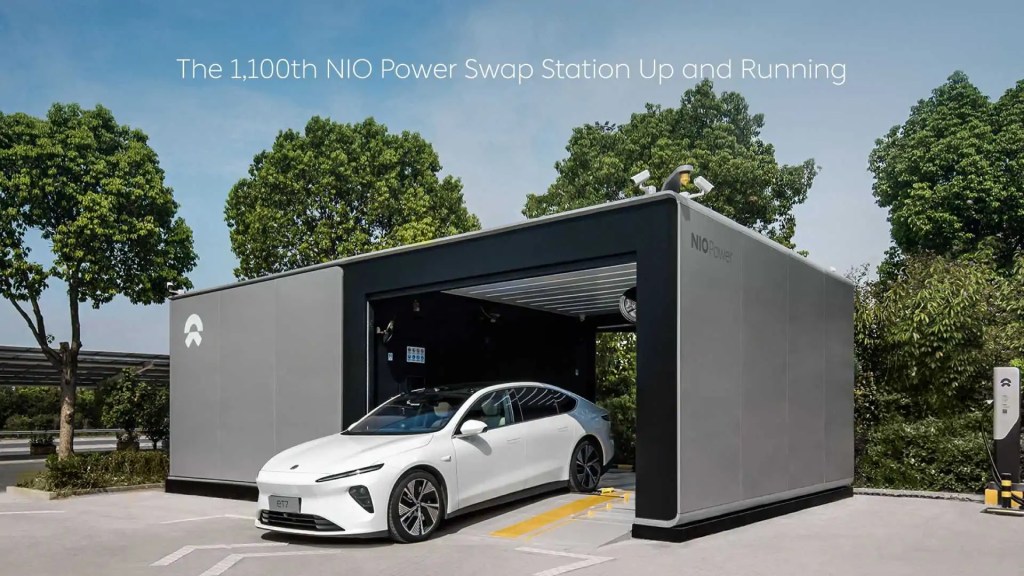
Beyond traditional plug-in stations, innovative charging solutions are emerging. Battery swapping, popularized by companies like NIO in China, can replace an EV’s depleted battery with a fully charged one in under 5 minutes. NIO has completed over 1,400 battery swap stations and performed over 30 million swaps as of 2023.
Mobile charging units are another rising trend. SparkCharge’s mobile charging solution can deliver up to 20 miles of range in just 20 minutes, offering a flexible alternative to fixed infrastructure; it’s CaaS (Charging as a Service). Additionally, solar-powered EV charging stations are gaining traction, with some models capable of generating up to 15 kWh per day, enough to provide about 50 miles of range to an average EV without drawing from the grid.
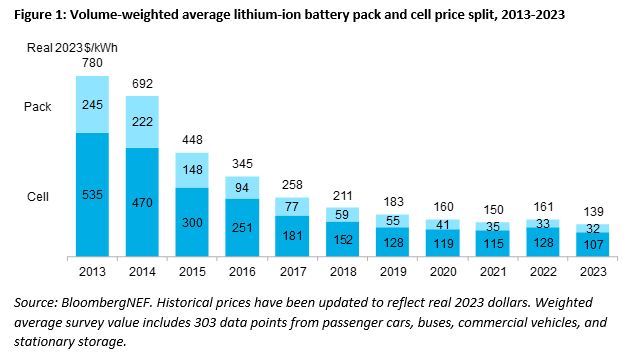
Plus, lithium-ion battery packs have decreased over 80% since 2013.
faster charging
The race for faster charging is intensifying. While current DC fast chargers typically offer 50-350 kW, next-generation chargers are pushing boundaries. Companies like ABB and Porsche are developing 800V charging systems capable of delivering up to 450 kW, potentially adding 100 miles of range in just 5 minutes. Tesla’s V4 Superchargers, expected to roll out widely by 2025, are rumored to support charging rates of up to 600 kW. These advancements could significantly reduce charging times, alleviating congestion at charging stations and making long-distance EV travel more convenient.
wireless charging
Wireless charging for EVs is no longer a distant dream but an emerging reality. Pilots like the one in Gothenburg, Sweden, have demonstrated the viability of dynamic wireless charging, where EVs can charge while in motion. The test track showed an impressive 90% efficiency in power transfer. This technology could revolutionize urban planning, potentially embedding charging capabilities directly into roads and parking spaces, thus reducing the need for visible charging infrastructure.
vehicle to grid technology
Vehicle-to-Grid (V2G) technology is set to transform EVs from consumers to active participants in the energy ecosystem. A study by Fermata Energy found that a single EV could generate up to $15,000 over its lifetime through V2G services. On a larger scale, if just 10% of the projected 30 million EVs in the U.S. by 2030 were V2G-enabled, they could provide up to 300 GW of flexible power – equivalent to 23% of the U.S.’s current 1.3 MW annual generating capacity. Bi-directional flow can stabilize grids, integrate more renewable energy, and reduce the need for stationary energy storage infrastructure. As EVs increase energy demand over the coming decades, alternative methods to support this load growth are crucial.
alternate ev charging approaches
ChargePoint, for instance, has been pioneering networked EV charging solutions, offering both public and private charging options. Like It’s Electric, they emphasize user-friendly designs and have been working on expanding curbside charging in urban areas. However, as a customer of theirs, I still think they can amp up the user-friendliness.
EVgo has been focusing on fast-charging networks and has also been exploring more accessible urban charging solutions. They’ve partnered with various cities to install curbside chargers, similar to It’s Electric’s approach. Shell Electric fka Volta Charging has taken a unique approach by combining EV charging with digital advertising displays, making their stations more economically viable in urban settings. As an aside, Shell paid ~$200M for Volta (purchase price, debt paydown, and secured notes, which is approximately $67K/charger based on Volta’s 3K chargers at the time of the March 2023 acquisition).
Their designs are less obtrusive, cost-effective to install, and easy to maintain. They’re leveraging various funding models, including public-private partnerships, advertising revenue, and government incentives, to accelerate the deployment of charging infrastructure.
A nationwide, coordinated approach is essential to develop the comprehensive infrastructure needed to support widespread vehicle electrification across all categories. This shift to an electrified future is more than technological; it’s a societal transformation that demands reimagining our urban landscapes and mobility systems. Innovations like curbside chargers are just the beginning. To fully realize the EV revolution’s potential, we must integrate this technology seamlessly into our cities, empower consumers with accessible charging options, and ensure the benefits are equitably distributed. With strategic infrastructure development and unified effort, we can overcome current challenges and pave the way for a cleaner, greener world powered by electric mobility. The future is electric, and it’s imperative we act now to build the foundation for this sustainable transformation.
If this article convinced you to go electric, use promo code TSLALVR for 10% off of your Cybertruck1
Thanks to this CoMotion podcast hosted by Nick Perloff-Giles with Tiya Gordon that inspired the post.
- ⚡unclear whether this will work ↩︎



 unpublished alpha