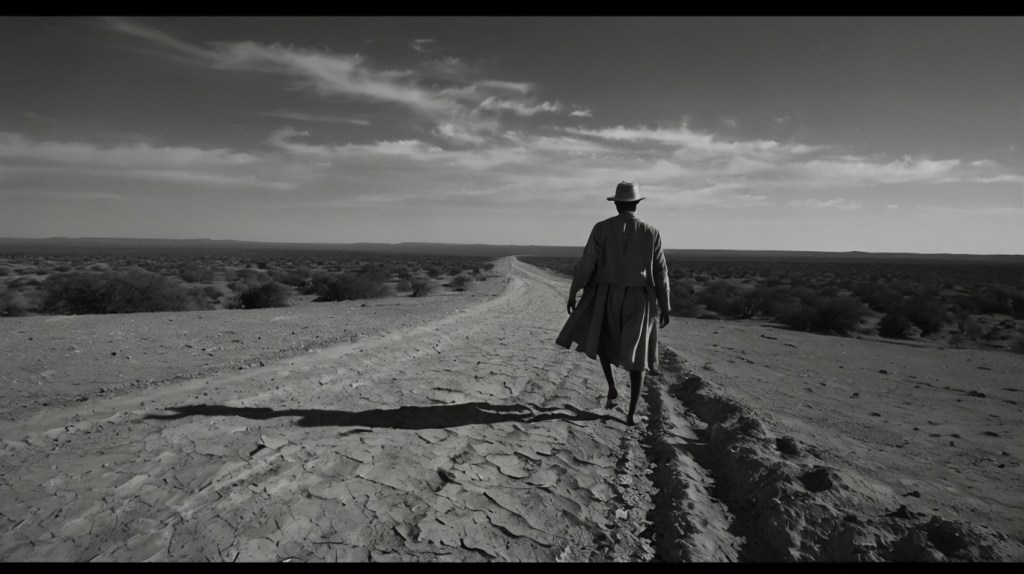
Paulo Nazareth had what to many would seem like a nightmare journey to NYC. No missed flights or cancelled connections, yet the travel time was over 13 months. He did this on purpose. It was part of his project Notícias de América (2011-2012). Starting in his home of Belo Horizonte, Brazil, he crossed 15 countries before arriving in New York City where he washed his feet in the Hudson River.
I first heard this trek while visiting the Boros Collection in Berlin, a private contemporary art gallery housed in what was a former Nazi war bunker turned Soviet prison, turned fruit warehouse, turned infamous gay nightclub. The collection itself, housed in concrete rooms beneath the penthouse that served as Cate Blanchett’s fictional home in Tár, rotates every few years.

Nazareth’s work has been present during both my visits. His provocative pieces draw on themes of colonialism and materialism, but to me there’s a dry humor threaded through his commentary.
On my last visit, I encountered a piece where viewers were invited to drive a knife into paper using an ink block, a physical, almost uncomfortable metaphor for our complicity in violence. Another piece featured enlarged cookie bags named after the Aymoré, an Indigenous group in Brazil, whose memory is being “erased” by a cookie company’s cultural appropriation of their name and the commercialization of their identity. Subtle? Hardly. But that’s part of what makes his work so gripping.
Paulo Nazareth’s decision to turn walking into a central aspect of his work places him within a broader tradition where physical action—specifically the act of walking—is recast as an artistic medium. Like Nazareth, several artists, including Richard Long, Hamish Fulton, Tehching Hsieh, and Marina Abramović, have each translated the simple, human act of walking into profound investigations of time, space, endurance, and human connection. Nazareth fuses this physical journey with broader socio-political narratives, transforming his walks into acts of resistance against colonial histories and economic exploitation.
Richard Long’s land art, epitomized by works like A Line Made by Walking, emphasizes the interaction between human presence and the natural world, using the body as a tool to inscribe meaning on the landscape.
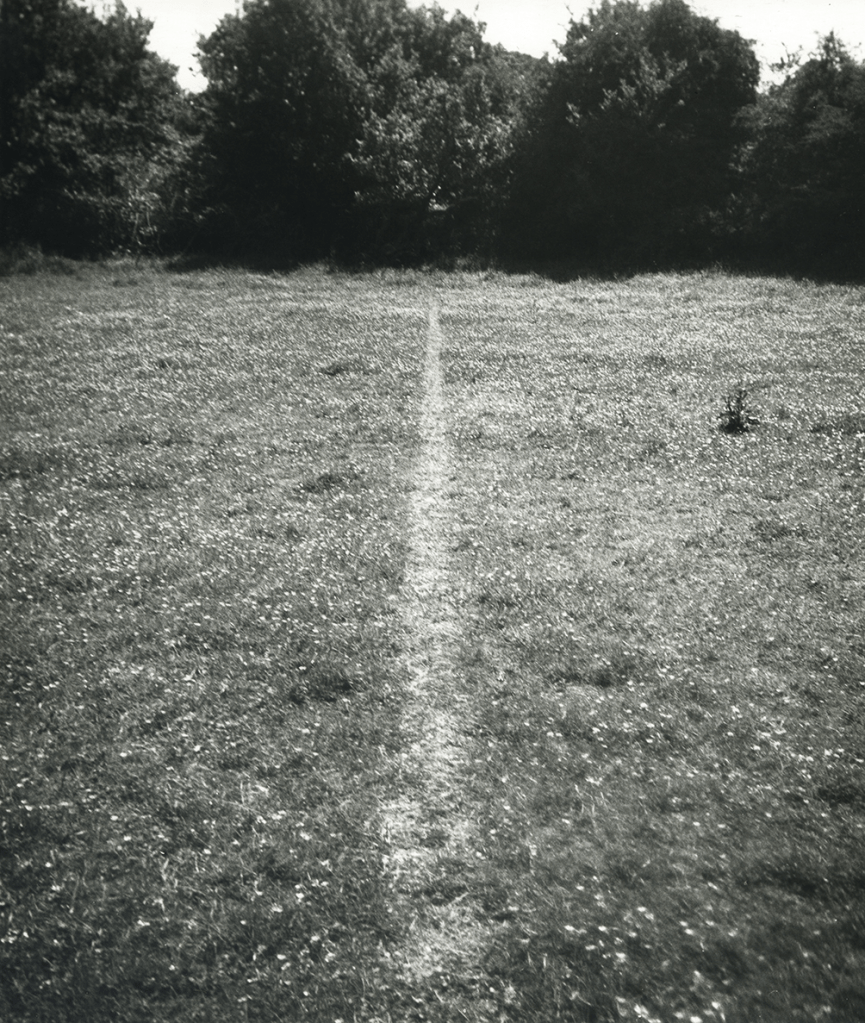
Where Long focuses on marking nature with human intention, Nazareth marks political and historical territories, walking not just to alter the landscape but to highlight the unseen geopolitical borders and invisible histories. His long journey from Brazil to New York was not merely about the physical challenge but about crossing borders, entering spaces loaded with colonial meaning, and tracing the complex pathways of migration and displacement.
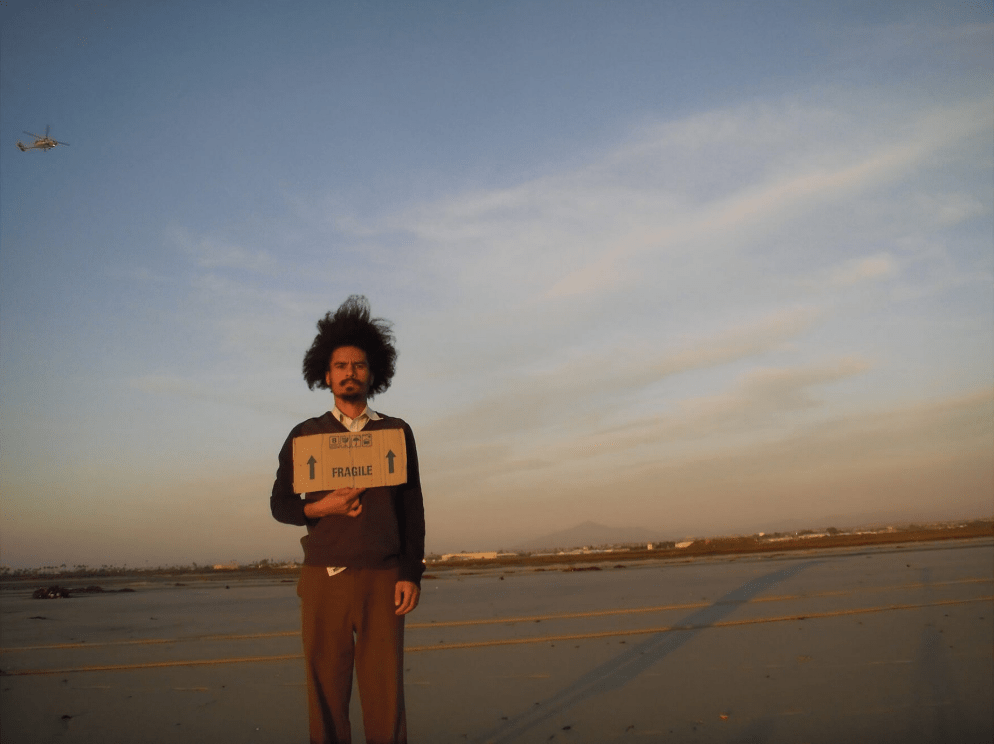
Similarly, Hamish Fulton’s walking art encapsulates the “experience” of the journey, where the walk is less about the destination and more about a meditative process. But where Fulton remains deliberately apolitical, presenting his walks as pure personal experience, Nazareth inserts himself into the fabric of socio-economic realities. His projects like Notícias de América are rooted in the histories of exploitation and resistance in the Americas. For Nazareth, walking is a confrontation, a literal and figurative movement through the historical residues of colonialism.
Tehching Hsieh takes the concept of duration and human endurance to the extreme, notably in his One Year Performances, where the body is tested against time and space. Nazareth’s work resonates with Hsieh’s in the way both artists explore endurance, but Nazareth’s endurance is not just about surviving the passage of time—it’s about enduring systemic inequalities. His walking pieces not only challenge the physical body but also the political and social body, suggesting that the mere act of moving through space can itself be a radical critique of the systems that govern that space.
Marina Abramović’s The Lovers: The Great Wall Walk introduces an element of human connection and emotional closure through walking. Nazareth, too, explores human connection, but in a more expansive, globalized way. His journeys, which he embarks on solo, are not just about interpersonal relationships but about the relationships between nations, cultures, and economic systems. Abramović’s walk was intimate, while Nazareth’s are sprawling, spanning continents and confronting the legacies of colonial trade routes and cultural erasure.
By converting walking into an artistic medium, these artists confront the limits of the body and the environment. The documentation (photographs) of the act is the art. But for Nazareth, walking is more than just a personal or aesthetic endeavor; it’s a political gesture, imbued with the histories of the people and lands he traverses. His work doesn’t just inhabit space; it interrogates it, asking viewers to consider not just where they are standing but what histories are embedded beneath their feet.
In this sense, Nazareth’s work operates as a critique of mobility—who gets to move freely, whose paths are obstructed, and what histories are revealed or concealed through the act of walking.
Paulo Nazareth has a “spiritual agreement” never to enter the United States by plane, rooted in his resistance to modern travel conveniences that contrast with the difficult experiences of migration. By walking across borders, he symbolically aligns himself with marginalized people who face barriers to movement, contrasting with those who easily cross borders via air travel.
To my knowledge he has no spiritual agreements against other forms of technology, but as Cecilia Alemani, art director of Highline Art pointed out in 2016, “he is kind of a character; he doesn’t have email or phone so we don’t really know where he is. He’s just going to come to the office one day and say, ‘Hey, I got like 1,000 watermelons to drop off on the High Line.’”
This intersection of physical action with political and historical critique adds layers of complexity to Nazareth’s practice, positioning him as an artist who both physically and conceptually walks through the landscapes of contemporary global capitalism.
In Paulo Nazareth’s world, walking is more than a journey—it’s a quiet rebellion against the boundaries that define and confine us.
By moving through the world on foot in many of his pieces, Nazareth encourages a shift in perspective, showing that sometimes the most profound insights come from slowing down and engaging directly with the landscapes and histories we pass through.

 unpublished alpha