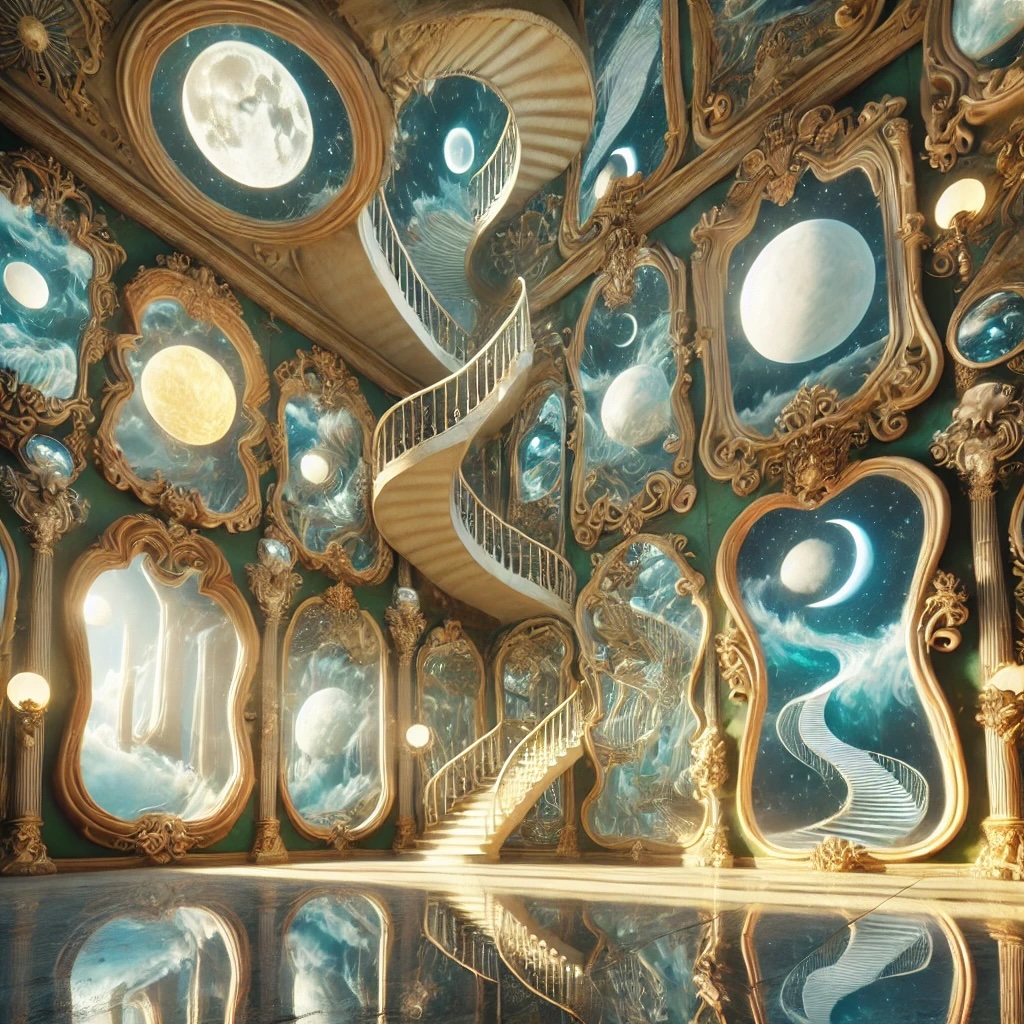
I found myself once again drawn to the outliers—the episodes that didn’t warn, but wonder, when watching Black Mirror’s seventh season. The ones that bent reality just enough to let something emotionally surreal leak in. The ones that felt like modern fables wrapped in digital skin.
The SAT word you’re grasping for—the jewel in the semantic crown—is neo-fabulism. It’s not quite science fiction, not exactly magical realism. It’s something that lives in the soft, weird territory between them—where technology feels more like metaphor than invention, and the story isn’t trying to predict the future so much as illuminate the present through emotional resonance.
It blends the symbolic structure of ancient fables in our collective brain with the texture and anxieties of the internet age. It lets us feel things we can’t quite explain and asks questions it has no interest in answering definitively. It’s less interested in cautionary tales than in creating emotional parables for our digital lives.
Think “San Junipero” or “Hang the DJ.” (probably my 2 favorite episodes). Or think “USS Callister,” “Beyond the Sea,” and “White Bear,” depending on how far you want to stretch the definition. These are the episodes that don’t just disturb or critique—they haunt.
By now, Black Mirror has cemented itself as a stalwart of the techno-paranoia subgenre. But, Season 7 reminded me how much better the show is when it stops trying to be sharp and instead lets itself get weird. There’s an episode in this season that plays like a digital fable. The technology isn’t really the point; it’s just the canvas. The real story is about loneliness, memory, and the quiet shame of moving on when others can’t.
Perhaps as a techno-(cautionary) optimist I’m drawn to the emotional metaphors wearing technological costumes and less to the cautionary tales about technology gone wrong. The episodes that embody this use the trappings of science fiction to tell deeply human stories that conventional realism can’t quite capture. It’s a way of adding to the buffet of human emotions. Traditional Black Mirror says: “What if this new device ruins your life?” Neo-fabulist Black Mirror says: “What if this device lets you feel something that’s no longer possible in ordinary reality?”
That shift from fear to feeling changes everything. “San Junipero” isn’t really about consciousness transfer—it’s about aging, forgiveness, and second chances. “Hang the DJ” isn’t (entirely) about dating apps—it’s about the leap of faith every relationship requires, the statistical improbability of finding someone who truly understands you. These episodes aren’t really concerned with predicting the future—they’re more interested in illustrating the present through metaphor. They’re not warnings—they’re windows into parts of the human experience that traditional storytelling struggles to access.
There’s something disarming about a story that doesn’t ask you to analyze but to feel. When “USS Callister” turns into a Star Trek-style escape fantasy, it’s not just pastiche—it’s a deep dive into power, escapism, and digital identity. The episode only works because it’s willing to be absurd, to lean into its metaphorical framework rather than its technological plausibility. And despite its dark premise, it ends with a strange hopefulness. They create safe distance through their fantastical elements while somehow getting closer to emotional truths.
Neo-fabulism understands that life doesn’t always feel like linear cause and effect. Sometimes life feels like symbolism. It feels like a metaphor you haven’t quite cracked. The best of these episodes leave you with that same feeling—off-center, unmoored, but slightly more awake.
These stories operate in the liminal space between the literal and the metaphorical. Like dreams, they can contain contradictions that make emotional sense even when they defy literal logic. They’re uncomfortable in the way that growth is uncomfortable—they shift your perspective just enough to make you see differently.
Black Mirror made its name by being grim and cutting. It gave us the cultural vocabulary for “this is why we can’t have nice things.” It warned us about social media (and general media) addiction early, yet is also broadcast on Netflix, a platform that considers sleep its competition.
Neo-fabulist Black Mirror gives us more parables and fewer predictions. Not dread, but the kind of discomfort that leads to insight. Not cynicism, but a strange new kind of hope. They ask: how would this make us feel? What emotions would become possible that weren’t before? What human experiences would be transformed? What if you could see your partner’s memories? What if grief lived inside a database? What if a simulation could teach you to hope again?
Structurally, these episodes feel different. They move with slower, more contemplative pacing, use warmer color palettes that soften Black Mirror’s usual bleakness, and often feature retro-futurist or analog tech—a nod to something more timeless than timely. Their endings lean bittersweet and open-ended, avoiding cynical gut punches.
Stories like these help us reconnect with things that are easy to lose sight of—hope, ambiguity, wonder, imagination. They treat technology not just as a threat, but as a lens—one that reveals us more clearly, even when the image is warped, flickering, a little bit strange. The best Black Mirror episodes aren’t black at all. They shimmer. They glitch. They let light in sideways. They remind us that technology can be a vessel for connection as much as isolation, for transcendence as much as despair. That’s why the neo-fabulist ones resonate most—they don’t just mirror our world; they whisper that we can dream beyond it.
After all, what good is a mirror if all it shows you is what you already know?

 unpublished alpha