In David Blaine’s National Geographic show, a marine biologist approaches a seven-foot tiger shark thrashing violently in shallow water. Instead of retreating, she calmly grasps the predator and flips it upside down. Within seconds, the fearsome creature goes completely limp, as if someone had flipped an off switch. Its breathing slows, its muscles relax entirely, and it enters what scientists call tonic immobility—a natural state of temporary paralysis that can last up to fifteen minutes.
This phenomenon isn’t unique to sharks. Throughout the animal kingdom, creatures possess hidden biological switches that can trigger dramatic physiological changes with the right stimulus. There’s thanatosis, where opossums and other animals “play dead” so convincingly they can fool predators into losing interest. Catalepsy allows certain animals to maintain rigid postures for extended periods, while the vasovagal response can cause humans to faint from something as simple as seeing blood or having their neck touched in just the right spot.
These natural phenomena might seem like biological curiosities, but they reveal something profound about the human body: we too possess specific locations that can trigger remarkable physiological responses when stimulated correctly. For thousands of years, across every continent and culture, humans have discovered and refined the knowledge of these pressure points—specific spots on the body that can relieve pain, alter consciousness, heal injuries, or even incapacitate an opponent.
What makes this knowledge even more fascinating is how different cultures independently discovered many of the same points, suggesting that these locations represent fundamental aspects of human anatomy and physiology. From ancient Chinese battlefields to Egyptian healing temples, from Japanese dojos to Native American medicine lodges, the story of pressure points is really the story of humanity’s quest to understand the hidden switches within our own bodies.
china and the birth of acupuncture
The earliest recorded exploration of pressure points begins in ancient China, where legend and historical fact intertwine in ways that still puzzle scholars today. According to traditional accounts, the discovery dates back to around 2700 BCE, when the mythical emperor Shen Nung began experimenting with various plants and substances on his own body. While testing these materials, he supposedly noticed that certain points on his skin became particularly sensitive or produced unexpected effects when pressed or pierced.
More credible historical accounts suggest that pressure point knowledge emerged from battlefield observations during China’s tumultuous early dynasties. Ancient Chinese physicians noticed that soldiers who survived arrow wounds sometimes reported unexpected healing effects in parts of their bodies far from the injury site. A warrior struck by an arrow in his foot might find that his chronic headaches disappeared, or an arm wound might somehow cure persistent stomach problems. These observations led early Chinese doctors to begin systematically mapping what they believed were connected pathways throughout the human body.
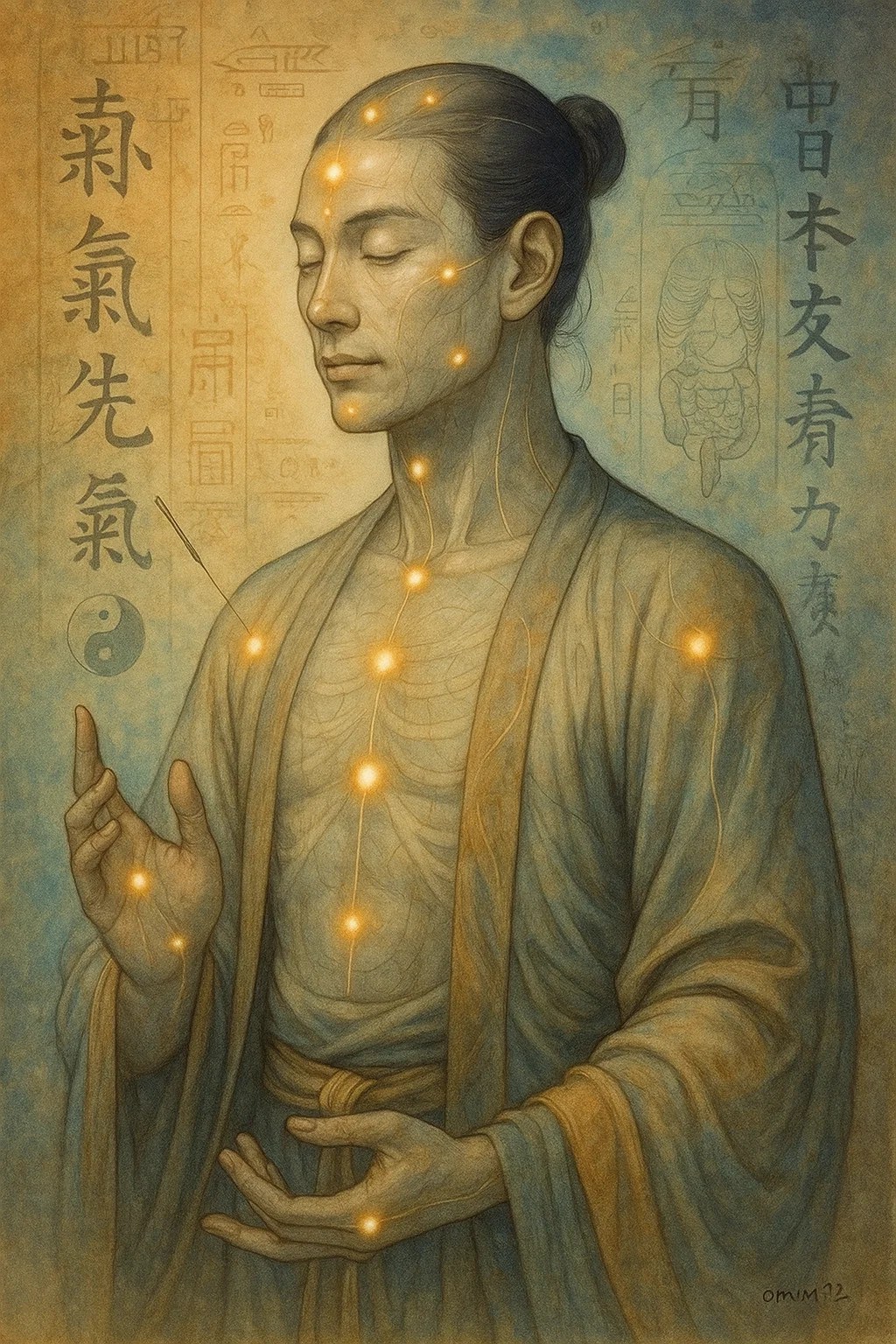
By the time the Han Dynasty consolidated power around 200 BCE, Chinese medical practitioners had developed an intricate system of 365 classical acupoints—not coincidentally matching the number of days in their calendar year. These points were understood to lie along twelve primary meridians, invisible channels through which qi (pronounced “chee”), or life energy, was believed to flow throughout the body. According to this theory, illness and pain resulted from blockages or imbalances in qi flow, while stimulating specific acupoints could restore proper energy circulation and health.
The meridian system represented far more than primitive superstition. Chinese physicians spent centuries carefully documenting which points produced specific effects, creating detailed maps of the human body that proved remarkably consistent across different regions and time periods. They discovered that stimulating a point on the hand could relieve toothache, that certain ear points could reduce nausea, and that specific combinations of points could address complex conditions like depression or chronic fatigue.
Military applications developed alongside medical uses, giving rise to the legendary dim mak or “death touch” techniques. While popular culture has greatly exaggerated these abilities, historical records suggest that Chinese martial artists did indeed study pressure points for combat applications. Rather than causing instant death as movies portray, these techniques were designed to temporarily disable opponents by targeting nerve clusters, blood flow restrictions, or respiratory disruption points. Ancient kung fu masters closely guarded this knowledge, passing it down through generations of carefully selected students who swore oaths of secrecy.
The foundational text that codified much of this early pressure point knowledge was the Huangdi Neijing, or Yellow Emperor’s Classic of Internal Medicine, compiled around 100 BCE. This remarkable document not only described the meridian system and acupoint locations in detail but also provided the theoretical framework that would guide Chinese medicine for the next two millennia. The text’s authors demonstrated sophisticated understanding of anatomy, physiology, and the interconnected nature of bodily systems—insights that wouldn’t be fully appreciated by Western medicine until centuries later.
parallel discoveries across cultures
What makes the story of pressure points truly remarkable isn’t just that the Chinese discovered them, but that cultures across the globe, with no contact between them, stumbled upon the same hidden switches in the human body. It’s as if nature had scattered clues about our anatomy across every continent, waiting for curious minds to piece them together.
In the shadow of the pyramids, ancient Egyptian physicians were conducting their own experiments with pressure and pain. The Papyrus Ebers, dating back to 1550 BCE, contains references to healing techniques that involved applying pressure to specific body points. But the Egyptians had an advantage the Chinese didn’t: their mummification practices had given them an intimate knowledge of human anatomy that wouldn’t be matched in other cultures for millennia. When you’ve removed thousands of brains through nasal passages and carefully preserved every organ, you develop an appreciation for how the body’s systems interconnect.
Egyptian temple physicians discovered that pressing certain points on the skull could relieve headaches, while specific hand positions could ease digestive problems. They even found that certain combinations of pressure points could help ease the psychological distress of grief—a discovery that makes perfect sense when you consider that much of their medical practice involved comforting families who had lost loved ones.
Meanwhile, in the bustling markets and ashrams of ancient India, a parallel system was emerging that would eventually become known as Ayurveda. Indian physicians identified 107 marma points—vital spots where flesh, bones, joints, tendons, and blood vessels intersect. Unlike the Chinese system, which focused on energy flow, the Indian approach was refreshingly practical. They understood that these points represented vulnerabilities in the body’s structure, places where relatively light pressure could produce dramatic effects.
The connection between Indian pressure point knowledge and yoga wasn’t accidental. Early yogis discovered that certain breathing techniques combined with pressure point stimulation could induce altered states of consciousness. They found that pressing specific points while holding particular poses could deepen meditation or even trigger mystical experiences. This integration of physical manipulation with spiritual practice would later influence martial arts traditions across Asia.
The Greeks and Romans, ever the pragmatists, approached pressure points from a medical perspective that feels surprisingly modern. Hippocrates, the father of Western medicine, documented what he called “referred pain”—the phenomenon where pressing or injuring one part of the body produces sensations in a completely different area. He couldn’t explain why this happened, but he meticulously recorded which points produced which effects.
Roman physicians who worked with gladiators developed perhaps the most sophisticated understanding of pressure points for combat purposes. When your job involves keeping fighters alive after they’ve been stabbed, slashed, and beaten, you learn quickly which spots on the body can cause someone to lose consciousness and which can bring them back. These combat medics discovered pressure points that could stop bleeding, others that could revive an unconscious fighter, and still others that could provide pain relief without the cloudiness that came with opium-based remedies.
But perhaps the most intriguing discoveries came from indigenous cultures that had no written language to record their findings. Native American healing traditions included pressure point techniques that were passed down through generations of medicine people. They found that certain points on the ears could reduce nausea during long journeys, while specific combinations of points could ease the pain of childbirth. Aboriginal Australians developed similar techniques, discovering that pressure applied to particular spots could help hunters remain alert during long tracking expeditions or could calm the anxiety that came with seasonal food shortages.
pressure points became weapons
The transformation of pressure point knowledge from healing art to combat technique reached its pinnacle in feudal Japan, where the constant warfare between rival clans created a desperate need for any advantage that could mean the difference between life and death. Japanese martial artists didn’t just adopt Chinese pressure point techniques—they refined them into something approaching a science.
The development of kyusho-jitsu, literally “vital point art,” emerged from a uniquely Japanese approach to combat. While Chinese martial artists viewed pressure points as one tool among many, the Japanese became obsessed with precision and efficiency. They spent decades mapping the exact locations of nerve clusters and blood vessels, testing different angles of attack, and developing techniques that could disable an opponent with minimal effort.
This obsession with precision wasn’t just academic—it was survival. The samurai class lived in a world where a single mistake could mean death, and armor technology had advanced to the point where traditional striking techniques were often ineffective. Pressure point attacks offered a way to defeat an armored opponent by targeting the vulnerable spots that no amount of metal could protect.
The secrecy surrounding these techniques was legendary, and for good reason. A master who taught the wrong student might find his own techniques used against him. Knowledge was passed down through generations using code words, hidden gestures, and training methods that disguised the true purpose of the techniques. Students might practice what appeared to be dance movements or meditation exercises, not realizing they were learning to locate and attack vital points on the human body.
Master Takeda Sokaku, one of the most feared fighters of the late 1800s, was said to be able to drop an opponent with a single finger touch. While this sounds like the stuff of legend, witnesses described seeing him apply gentle pressure to specific points on an attacker’s neck or shoulder, causing them to collapse instantly. The reality was likely less mystical than it appeared—Takeda had simply mastered the art of targeting nerve clusters and pressure points that could cause temporary paralysis or unconsciousness.
The integration of pressure point techniques into jujitsu and the early development of aikido created martial arts that looked almost magical to outside observers. Aikido founder Morihei Ueshiba was known for his ability to throw multiple attackers without appearing to use any force. While Ueshiba’s spiritual philosophy emphasized harmony and redirection rather than violence, his techniques relied heavily on precise pressure point manipulation to unbalance and control opponents.
Modern mixed martial arts have begun to rediscover these ancient techniques, though often without understanding their historical context. When UFC fighters apply chokes that cause opponents to “tap out” almost instantly, they’re often unknowingly using pressure point principles developed centuries ago. The rear naked choke, for instance, works by applying pressure to specific points on the neck that restrict blood flow to the brain—a technique that Japanese jujitsu masters had perfected long before anyone understood the physiology behind it.
Law enforcement agencies have also begun incorporating pressure point techniques into their training, recognizing that these methods can subdue suspects without causing permanent injury. Police officers learn to apply pressure to specific points that can cause temporary paralysis or compliance without the need for weapons or excessive force.
But perhaps the most significant development has been the scientific validation of pressure point effectiveness. Neurologists now understand that many traditional pressure points correspond to locations where major nerves lie close to the surface of the skin. When pressure is applied to these points, it can trigger reflexive responses that cause muscle weakness, disorientation, or even temporary loss of consciousness. The vagus nerve, which runs from the brain stem to the abdomen, is particularly susceptible to pressure point manipulation and can produce dramatic effects when stimulated correctly.
from ancient wisdom to modern healing
The collision between Eastern pressure point traditions and Western medical skepticism created one of the most fascinating stories in modern healthcare. When European missionaries first encountered acupuncture in 17th-century China, their reactions ranged from horror to amazement. Some dismissed it as primitive superstition, while others watched in astonishment as Chinese physicians relieved pain and treated illnesses using nothing more than thin needles inserted into specific points on the body.
The real breakthrough came in the 19th century when a handful of Western physicians began systematically studying these techniques. They faced enormous resistance from the medical establishment, which viewed anything that couldn’t be explained by current scientific understanding as quackery. But results spoke louder than theory, and gradually, a small group of practitioners began incorporating pressure point techniques into their practice.
The turning point came with Dr. Janet Travell, a physician who would eventually become famous as President John F. Kennedy’s personal doctor. In the 1940s and 1950s, Travell began investigating what she called “trigger points”—specific spots in muscles that, when pressed, could cause pain to radiate to other parts of the body. Her work revealed that many traditional acupuncture points corresponded exactly to these trigger points, suggesting that ancient practitioners had been onto something significant.
Travell’s breakthrough came when she began treating Kennedy’s chronic back pain using trigger point therapy. The future president had suffered from back problems since childhood, and traditional medical treatments had provided little relief. Travell discovered that by applying pressure to specific points in Kennedy’s back and hip muscles, she could dramatically reduce his pain and improve his mobility. The success of this treatment not only helped Kennedy maintain his political career but also brought trigger point therapy into the mainstream of American medicine.
The development of modern pain management techniques owes much to this integration of ancient wisdom with contemporary understanding. Physical therapists now routinely use pressure point techniques to treat everything from chronic headaches to sports injuries. They’ve found that applying sustained pressure to specific points can release muscle tension, improve blood flow, and stimulate the body’s natural pain-relieving mechanisms.
Migraine sufferers have particularly benefited from these developments. Modern research has identified specific pressure points on the head, neck, and hands that can provide rapid relief from migraine pain. Many people have learned to apply pressure to these points themselves, finding that they can often stop a migraine in its early stages without medication.
The integration of technology with traditional pressure point knowledge has created entirely new treatment possibilities. Electrical stimulation devices can now deliver precise amounts of current to specific acupuncture points, providing consistent and repeatable results. Ultrasound-guided pressure point therapy allows practitioners to target deep muscle tissue with unprecedented accuracy.
Perhaps most remarkably, smartphone apps now exist that can help people locate and stimulate pressure points for common conditions like headaches, nausea, and stress. These apps use detailed anatomical maps and step-by-step instructions to guide users through pressure point protocols that would have been closely guarded secrets just a few generations ago.
the science behind these secrets
The most fascinating aspect of modern pressure point research isn’t just that these techniques work, but that we’re finally beginning to understand why they work. The human nervous system, it turns out, is far more interconnected and responsive to pressure than anyone had imagined.
The gate control theory of pain, developed in the 1960s, provided the first scientific explanation for many pressure point phenomena. This theory suggests that the nervous system can only process a limited amount of sensory information at once. When pressure is applied to specific points, it can essentially “close the gate” on pain signals, preventing them from reaching the brain. This explains why rubbing an injury instinctively makes it feel better, and why pressure point techniques can provide immediate pain relief.
But the mechanisms go deeper than just pain modulation. Pressure point stimulation has been shown to trigger the release of endorphins, the body’s natural painkillers. These chemicals are more powerful than morphine and can provide hours of pain relief from just a few minutes of pressure point manipulation. The locations of many traditional acupuncture points correspond exactly to areas where endorphin release is most easily triggered.
The vascular system also plays a crucial role in pressure point effectiveness. Certain points, when stimulated, can cause significant changes in blood pressure and circulation. The dramatic fainting responses that can result from pressure applied to specific neck points occur because these locations house clusters of pressure sensors that regulate blood flow to the brain. When these sensors are stimulated, they can trigger a vasovagal response that causes a sudden drop in blood pressure and loss of consciousness.
Modern brain imaging technology has revealed that pressure point stimulation activates specific regions of the brain associated with pain processing, emotional regulation, and autonomic nervous system control. When researchers use fMRI scanners to observe the brains of people receiving acupuncture, they see activity in areas that wouldn’t normally be affected by simple skin stimulation. This suggests that pressure point techniques tap into fundamental aspects of how the brain processes and responds to sensory information.
Perhaps most intriguingly, genetic research has begun to identify why some people are more responsive to pressure point techniques than others. Variations in genes that control pain perception, neurotransmitter production, and nervous system sensitivity all appear to influence how effectively pressure point stimulation works for different individuals.
the eternal return
From the moment that marine biologist first discovered she could paralyze a shark with a simple flip, to the ancient Chinese physicians mapping invisible meridians, to the modern neuroscientist watching brain scans light up during acupuncture, we’ve been circling the same fundamental truth: the human body contains hidden switches that can produce remarkable effects when activated correctly.
What makes this knowledge so enduring isn’t just its effectiveness, but its accessibility. Unlike many medical advances that require expensive equipment or years of training, basic pressure point techniques can be learned by anyone. A parent can ease their child’s headache with a gentle touch to the right spot. An athlete can reduce muscle tension using nothing more than their own fingers. An elderly person can manage chronic pain without relying solely on medications.
The future of pressure point therapy lies not in replacing modern medicine, but in complementing it. As we develop more sophisticated understanding of genetics and neuroscience, we’re moving toward a world where pressure point treatments can be personalized based on individual genetic profiles and brain imaging. Imagine a future where your smartphone can scan your DNA and recommend specific pressure point protocols tailored to your unique physiology.
The story that began with ancient warriors and healers continues to unfold in research laboratories and medical clinics around the world. Each discovery brings us closer to understanding the remarkable machine that is the human body, and the elegant simplicity of the pressure point systems that our ancestors discovered through centuries of careful observation and experimentation.
In the end, perhaps the most remarkable thing about pressure points isn’t the exotic techniques or mystical traditions, but the simple fact that relief from pain and suffering can sometimes be found in the gentle application of pressure to just the right spot. It’s a reminder that healing doesn’t always require complexity, and that some of the most profound discoveries come from simply paying attention to what our bodies have been trying to tell us all along.


 unpublished alpha