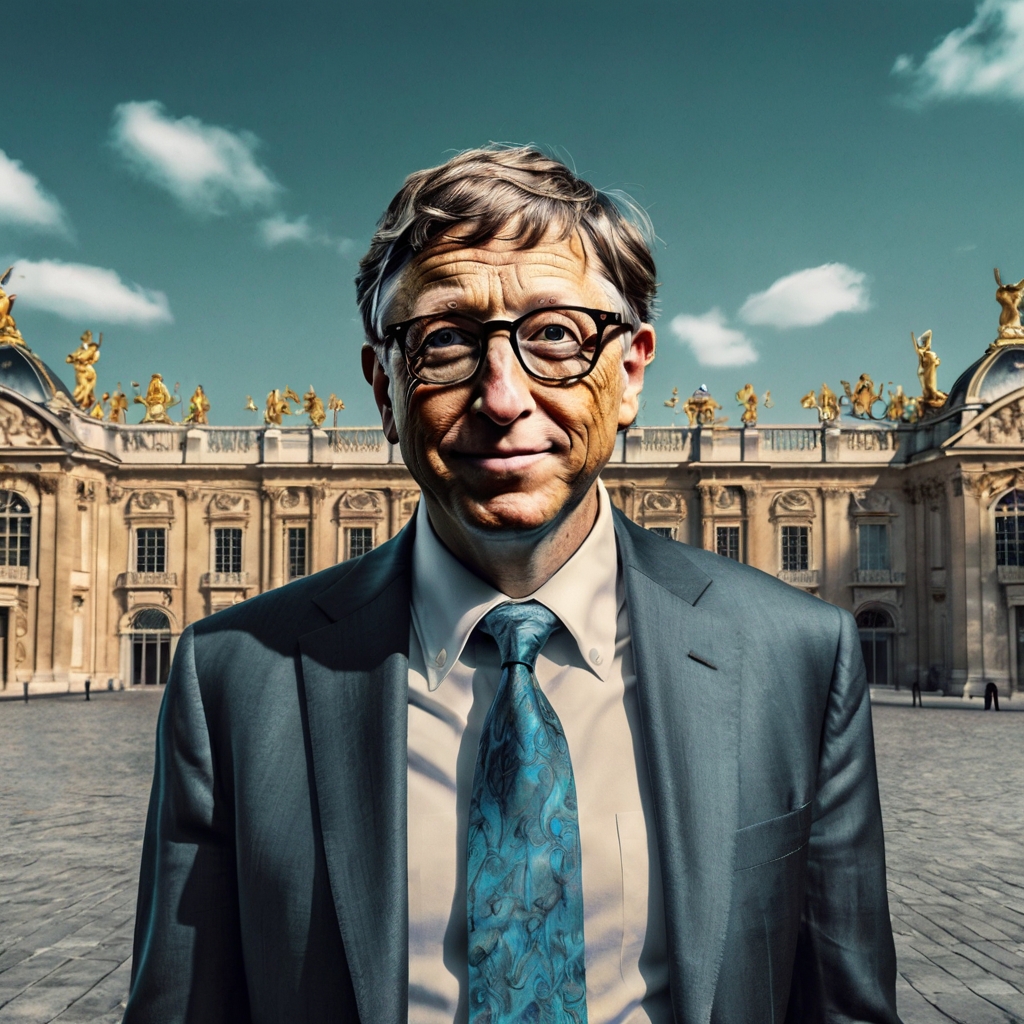
In first grade, our class made a quilt for the school auction where each square had a child’s “fierce wondering.” A question colored in fabric marker on a 10×10 square containing the biggest mystery to each six-year-old. Some kids asked why there was no world peace. Others wanted to know if aliens were real. My square read, “How rich is Bill Gates?”
This was not something I picked up at home. My parents didn’t talk about stock prices over dinner. I just had an unprompted fascination with money. I’m not the onlly one with this fascination. In 1982, Forbes published its first list of the 400 richest Americans. In 1987, they expanded it to a list of the world’s billionaires. There were 140 names on it that year.
When we talk about the richest person alive, we tend to think of Bill Gates as the original. But when Forbes published that first international list, the name at the top was Yoshiaki Tsutsumi. He was a Japanese real estate mogul whose holdings stretched across railways, hotels, and resorts. His fortune was inflated by the dizzying heights of Japan’s asset bubble, and for several years he held the crown. Then the bubble burst in the early 90s, and with it his reign.
Gates took over and would remain the richest person in the world for nearly twenty years. There were a few brief interruptions from Carlos Slim, the Mexican telecom magnate who overtook him in the late 2000s. Jeff Bezos had his moment too, before Elon Musk began leapfrogging him in the rankings. In 2025, Musk sits on top with a fortune estimated at $342 billion. It is the kind of number that loses its meaning as soon as you say it out loud.
There are more billionaires now than ever before. When Forbes started keeping track, the number was small enough to fit into a small backyard. Today there are more than three thousand, with a combined wealth of more than sixteen trillion dollars. The United States alone has over nine hundred of them, more than any other country. Tech dominates the list, but fortunes in fashion, retail, and finance still hold their own. The richest woman in the world today is Alice Walton, heir to the Walmart fortune, with a net worth north of a hundred billion.
What interests me is not just the size of these fortunes but the persistence of the question that made me stitch that quilt square. The world has changed. The number of billionaires has multiplied more than twenty-fold over the last 40 years. Money has become more abstract, more detached from the things it can actually buy. And yet we still talk about the richest person as if there can be only one, as if it is a crown passed from hand to hand. We follow these transitions with the attention of sports fans tracking a championship, or courtiers gossiping about a royal family.
The stories are always the same. A king rises. The king falls. Someone else takes his place. The zeroes grow longer. The palace changes shape. The cast rotates but the drama remains. Even when the amounts become so large that they float somewhere beyond imagination, they remain irresistible as symbols.
I sometimes wonder what happened to that first-grade quilt. Whether my square still exists in a box somewhere, sandwiched between world peace and extraterrestrial life. It was a child’s question, but also a child’s way of putting shape to a bigger curiosity. Wealth is a number, yes, but it is also a story. The story of who gets to have it, how they keep it, and what it says about the rest of us.
If I made a new square today, it might not ask how rich Bill Gates is. It might ask why, despite having thousands more billionaires, despite the money being so out of proportion to most people’s lives, we still look for a single name to put at the top.

 unpublished alpha