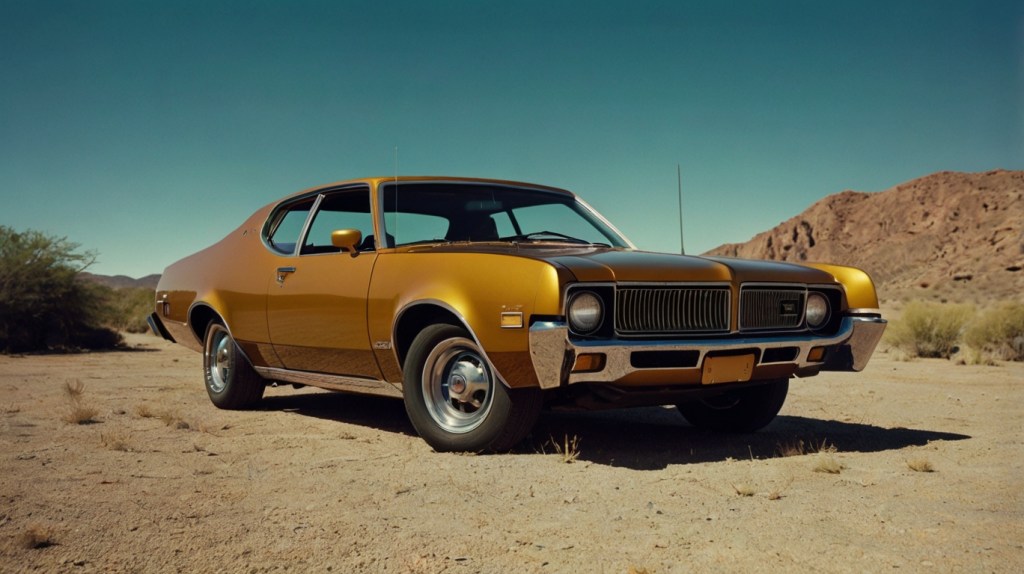
I wasn’t looking for a Maserati TC. Nobody really is. But there it was, parked halfway up the block from my apartment, wearing that quietly apologetic posture that only certain late-80s cars have. The badge said Maserati, but the body said Chrysler. Lee Lacocca wanted a halo car to bring glamour to Chrysler, and Maserati needed cash. Which is exactly what it was, a peculiar arranged marraige between Italian craftsmanship and Detroit pragmatism.
The TC’s brief three-year run made it easy to forget, as if it had only flashed by for a single season. That brevity makes it easy to dismiss as a failure, but standing there on the sidewalk, I felt something else. A car that only exists for a single model year isn’t just a product that didn’t work. It’s a time capsule. A single, frozen experiment in design, marketing, and misplaced optimism.
One-year cars happen for a lot of reasons. Sometimes it’s a regulatory dead-end, a model that can’t clear new emissions standards. Sometimes it’s a marketing blunder, like releasing a convertible in a recession or a sports coupe just as fuel prices spike. And sometimes it’s simply bad timing: the public mood shifts, the company gets acquired, and a project that took years to build is gone after twelve months.
But here’s the strange thing: these short-lived models often become more interesting than the long-runners. The Ford Mustang will always have its devotees, but it’s the oddball 1971 AMC Matador coupe or the 1997 Toyota Paseo convertible that sticks in your head once you’ve seen one. You can almost feel the boardroom optimism that birthed them, the late-night engineering compromises, the marketing copy that tried to will them into being.
The Maserati TC wasn’t entirely alone in this category. The 1980 Dodge Aspen R/T, with its brief flirtation with performance before being sunk by quality issues, had the same blink-and-you’ll-miss-it run. So did the 1963 Chrysler Turbine Car, a rolling science project powered by a jet engine, pulled after exactly one year of public trials. Even the DeLorean DMC-12, more famous for Back to the Future than for its actual road manners, barely made it past one full model year before the company imploded.
There’s a bittersweet beauty to these cars. They were made to be sold in volume, to be seen everywhere. Instead, they became rare not through craftsmanship or exclusivity, but through the quiet attrition of the marketplace. If you spot one now, you’re looking at a survivor of a failed idea. Which somehow makes it feel like a found artifact from an alternate history.
Thinking about one-year cars has changed the way I see other kinds of short-lived things. Most products, from sneakers to phone apps, either evolve or disappear so quickly we don’t even notice. Cars are different. They’re too big to vanish quietly, so when they do, it feels deliberate, almost theatrical. Like the curtain falling after a single act.
It’s also made me think differently about my own habits. There’s a tendency to value only the things that last: the ten-year friendship, the long-running job, the brand that endures. But there’s a kind of magic in the short-lived. The one-off dinner party where everything clicks, the side project that never scales but makes you absurdly happy for a summer, the playlist you make (or Spotify makes for you) for a single road trip and never touch again. The Maserati TC is the car equivalent of those moments.
Of course, there’s also the practical side. One-year production runs often mean headaches for owners: hard-to-find parts, mechanics who’ve never worked on one, resale values that make your insurance agent wince. But the same thing that makes them inconvenient makes them alluring. If you own one, you’re automatically in a club with extremely limited membership.
Some one-year cars weren’t meant to be rare at all; they just never found their footing. The 2002 Lincoln Blackwood arrived as a leather-lined pickup with a carpeted, covered bed at the exact moment buyers wanted rugged practicality, not a tuxedo truck. The 2005 Saab 9-2X Aero, a clever rebadging of the Subaru WRX, disappeared almost as soon as GM sold its stake in Saab. The 2012 Fisker Karma, an ambitious luxury plug-in hybrid, was felled in part by its startup’s financial troubles and a battery recall. And the 2014 Cadillac ELR, a handsome luxury coupe built on Chevy Volt technology, was priced too high for a market not yet ready to pay extra for plug-in hybrids. These were not designed as fleeting novelties, but as earnest attempts at carving a niche, undone by timing, taste, or the tides of the economy.
I think about that now when I walk past that TC on my block. It’s still there, still slightly out of place, still wearing that badge that promises more than the car can deliver. Most people don’t notice it. But I do, and I think of all the other one-year wonders out there, quietly surviving against the odds. They remind me that not everything has to last to be worth noticing. Sometimes it’s enough just to have existed, even for a little while.


 unpublished alpha