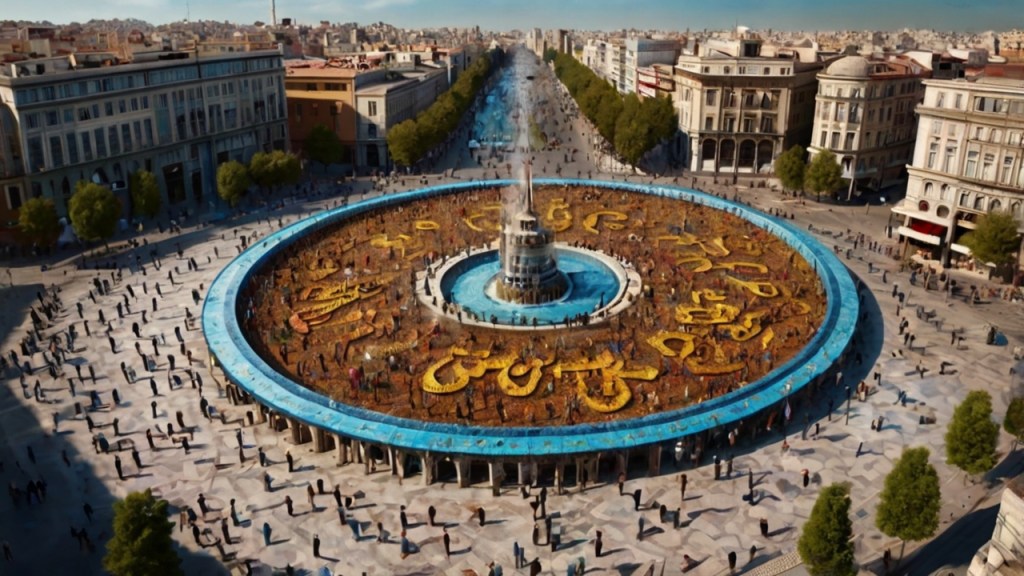
I was in Taksim Square a couple weeks ago enjoying the mid-October breeze, standing beneath the statue of Atatürk, typing away on ChatGPT learning about how Turkey once changed its alphabet. To rewrite a nation’s alphabet is to perform a quiet revolution. You are not just changing how people speak, but how they think about what speaking means.
In 1928, Turkey replaced its Arabic script with a Latin one. It was a decision made in the name of progress, clarity, and the West. But it was also an act of forgetting. Whole generations found themselves cut off from their own history. The poems, decrees, and diaries of the Ottoman world became artifacts. Literacy rose, but continuity cracked. In Turkey, the change reshaped the very fabric of the language itself; in Central Asia, later in the century, it was more a reorientation of script than of speech; a lexical leap, if you well.
After the fall of the Soviet Union, that same logic unfolded again. Azerbaijan, Uzbekistan, and Kazakhstan turned from Cyrillic toward Latin. The letters themselves became statements of independence. To switch alphabets was to declare allegiance not just to a new world order, but to a new imagination of the self.
I keep coming back to the idea that this impulse is not only political, but spiritual. We all have our alphabet reforms. We change the words we use to describe our lives, hoping that new vocabulary will rewrite old wounds. We revise ourselves into coherence, even if what we seek is simply a quieter form of forgetting.
But reinvention always comes with residue. Every new language carries ghosts of the one it replaced, humming beneath the surface, reminding us that even transformation is a kind of translation. Progress, after all, isn’t clean; it’s written in palimpsests, on pages that never truly forget their first words.


 unpublished alpha